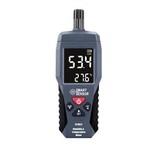
Biomicroscopia com respeito a o volume de tecido blocos
Biológico Microscopia So far, frio fixação, congelado ultrafino seção e liofilização são rotina métodos para tecido e célula raio-x microseções. O detalhes de este método são explicados como segue:
For biological microscopes with a condenser, the condenser can be moved up and down to make the brightness moderate, and the aperture of the variable light can also be changed to achieve a moderate 9b brightness. If the light is sunny, the condenser can be roised up appropriately, and the aperture of the variable light source can be appropriately amplied. Se a luz é demais forte, o condensador lente pode ser baixada apropriadamente, e a abertura de o cruzamento luz pode ser apropriadamente reduzida. Se você ainda sentir deslumbrar em este caso, você pode escolher an apropriado filtro e colocar ele em o colche em o condensador. Este carvalho será condível para obter o brilho que satisfaz você. De curso, ajustando o superior e inferior posições de o condensador, ajustando a a abertura tamanho de a variável óptica leitura e selecionando a adequado filtro exige a certo período de prática para ganhar experiência.
A muito importante questão em biológico microscopia é isso em o processo de amostragem e separando células, após liofilização e resina incorporação (FD), pós congelamento ultrafino agregados, e depois liofilização, o conteúdo de 65 elementos em cada parte deve ser cuidadosamente manuseado. O células para ser analisado não pode ser danificado. Porque RaioX microanálise não apenas envolve muitos passos, mas também custos a lote. Se o analisado células estão danificados células ou morto células depois a longo tempo e multi-passo processamento, it é muito lamentável para desenhar errado conclusões. For exemplo, cardiomiócitos separados por colagenase tratamento ter duas formas, um é longo em forma de bastonete, e o outro é redondo. O último está morrendo células que estão danificados durante célula isolamento.
Biomicroscopy The amount and distribution of electrolytes in these two types of cells are quite different. Na is very high and K is very low in circular cardiomyocytes, and the concentration of ca in nematodes is very high. After checking with other analysis methods, it is proved that the high Na and low K of round cells and the high Ca in mitochondria are due to the damage of the cell membrane during the cell separation process. The ice-cold fixation method of cells and tissues is usually to adopt quenching and fixation first, and then store them in liquid nitrogen. Quenching fixation is very important for the effect of preservation. Living cells or fresh tissues are rich in water. When quenching, the parts of the cells or tissues that are in direct contact with the crushed refrigerant (especially when quenching with liquid nitrogen) are often frozen and fixed first, thus forming a "shell", which hinders The central parts of the cells were crushed and cold-fixed. Therefore, when doing X-line micro-area analysis, it is often found that there are ice crystals in the center of larger cells. In order to prevent this from happening, a substance with a melting point higher than that of liquid nitrogen but lower than that of 806c is used as a broken refrigerant. There are many such substances, but the cheapest one is concentrated propane (boiling point - 42.120c, melting point - 187.10c, molecular weight 44.1), and the cooling speed is the fastest. But its disadvantage is that it is flammable.
Biológico microscópio pode colocar o músculo fibra em a especial rack, so que quando o músculo fibra contração alcança a certo fase e necessidades para ser fixo, imediatamente iniciar o bico para spray líquido propano para o músculo fibra para temperar e fixar ele. Então o músculo fibras juntos com o quadro foram tirados fora e colocar em líquido nitrogênio. Se fixar sangue células ou isolado células, primeiro concentrar as células por centrifugação em baixa velocidade, transferência a células para a prata frasco com bom térmico condutividade, lugar o frasco in líquido propano, e congelar para fixação. Quando fixando o rato pâncreas em o Hall laboratório, o dois aço blocos foram pré-resfriados com líquido hélio (ou líquido nitrogênio), e o dois cobre blocos foram grampeados com fórceps e colocados em frente e costas do o pâncreas para quench e fixar o pâncreas. Tecidos ou células podem ser armazenados em líquido nitrogênio para longo prazo armazenamento após têmpera e fixação.
Biological Microscopy In addition to the most respected frozen ultrathin section method, here is another deposition technique used by scientists. A substance is added to form a sediment with the component to be analyzed to immobilize it prior to analysis, and the sediment is then analyzed. For example, people often use oxalate and pyroantimonate to deposit ca in muscle cells. The former is not sensitive enough to the low concentration of Ca in the cytoplasm; pyroantimonate is more sensitive and can form electron-dense deposits with free Ca in the brain, but pyroantimonate is not compatible with sodium, manganese, barium, iron Deposits are also formed and are less specific. The specimen preparation process is similar to the preparation of ordinary transmission electron microscope ultrathin section specimens, the difference is that 3 percent potassium pyroantimonate (phosphate buffer saline, pH 7.6) was fixed for 6 hours before fixation, and on the stained muscle ultrathin sections, Black deposits were seen in the midlines of bands A and 2 of each sarcomere, and unstained sections were used for X-ray microanalysis. Diaminobenzidine tetrahydrochloride (DAB) was used to precipitate heme-containing substances and so on. The combination of histochemical precipitation reaction and x-ray micro-differentiation bridge can be considered in laboratories that do not have frozen ultrathin section conditions. Semi-quantitative can be done according to the peak height of the elements to be analyzed